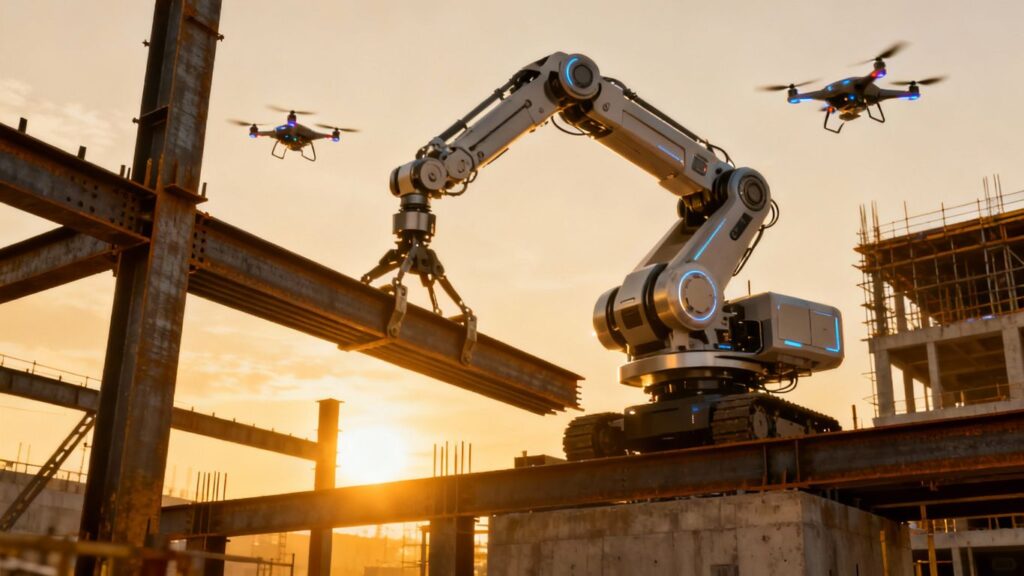
Right then, let’s have a yarn about how robots are set to shake things up on Kiwi job sites by 2026. It’s not just about sci-fi stuff anymore; this is real. You’ll probably see more machines getting stuck into the grunt work, from the early stages right through to finishing touches. Think less back-breaking labour and more smart tech doing the heavy lifting, or at least a good chunk of it.
Key Takeaways
- Construction robotics are stepping up their game, handling tasks from surveying and demolition to automated bricklaying and drilling, making building sites smarter.
- You’ll likely be working alongside collaborative robots (cobots) that are designed to share the workspace safely, making jobs easier.
- Robotics-as-a-Service (RaaS) is popping up, meaning you don’t have to fork out heaps of cash to use advanced tech – it’s becoming more accessible for everyone.
Construction Robotics: Building A Smarter Future
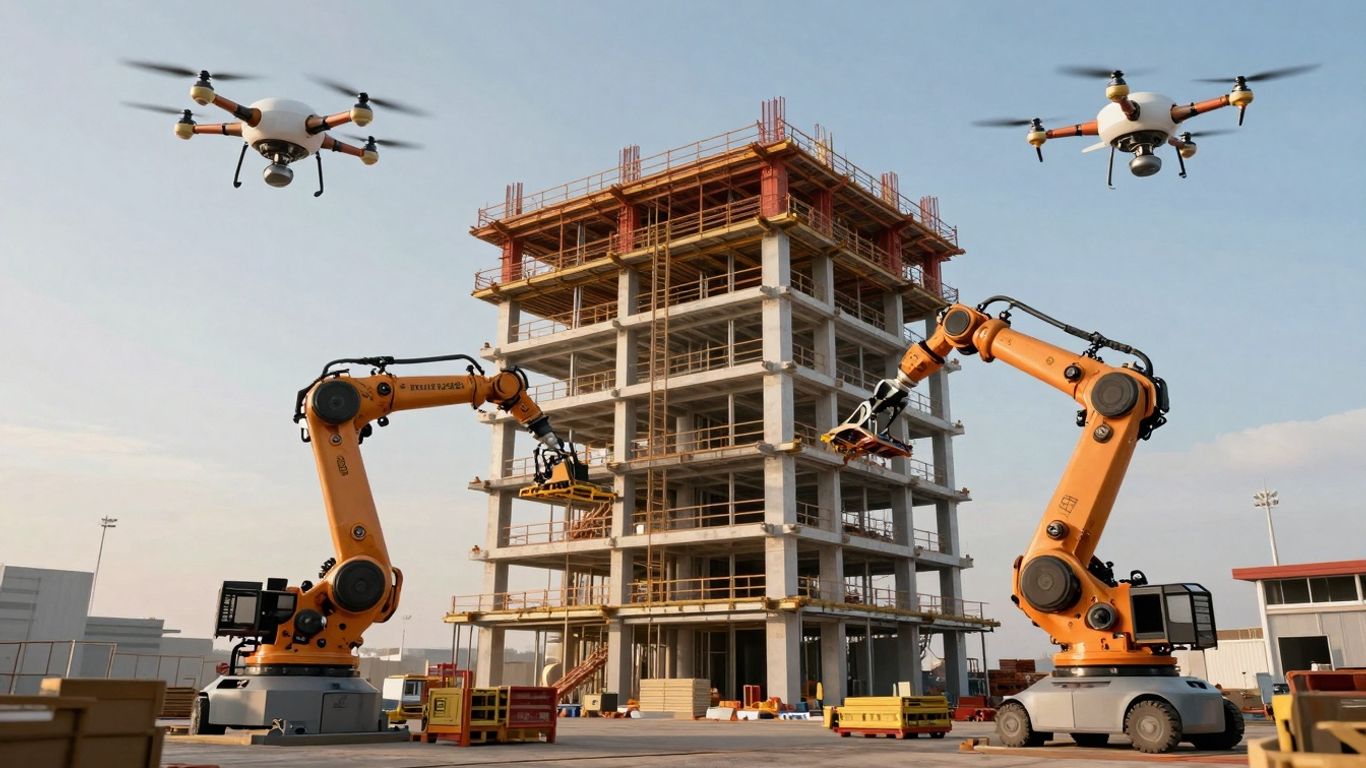
Right then, let’s talk about how robots are going to shake up the building game by 2026. It’s not just about sci-fi anymore; we’re seeing actual machines getting stuck into the nitty-gritty of construction. You know, the stuff that’s usually tough, dirty, or just plain repetitive for us humans.
Robots On The Rise: From Surveying To Demolition
Think about the start of any big project. You’ve got surveyors out there, often in tricky spots, mapping everything out. Well, imagine drones and ground robots doing that job. They can get into places that are a bit dodgy for people, collect super accurate data, and do it way faster. This means fewer blokes in high-vis jackets squinting at screens in the rain. By 2026, this kind of automated surveying is going to be pretty standard. It’s not just about mapping, either. We’re talking about robots doing the initial site clearing and even the demolition. Picture a machine that can carefully take down an old wall, piece by piece, without putting anyone at risk. This is a massive step up from the old days of just swinging a sledgehammer.
Here’s a quick look at where robots are stepping in:
- Site Surveying: Drones and autonomous vehicles collecting detailed site data.
- Demolition: Robots designed to safely dismantle structures.
- Material Handling: Automated systems moving heavy materials around the site.
- Inspection: Robots checking structural integrity or identifying potential issues.
The sheer amount of data these robots can gather is incredible. It means we can spot problems before they even start and plan the build much more precisely. It’s like having a super-powered assistant who never gets tired and always gets the details right.
Boosting Efficiency With Automated Bricklaying And Drilling
Now, let’s get to the actual building part. You’ve probably heard about robots laying bricks. Machines like Hadrian X have been around, and by 2026, they’re going to be a lot more common. Instead of a brickie laying, say, 500 bricks a day, a robot could potentially lay thousands. This isn’t just about speed; it’s about consistency. Every brick is placed perfectly, which means stronger walls and less waste. And it’s not just bricks. Think about drilling. Installing pipes and cables means drilling hundreds, maybe thousands, of holes. Robots like Baubot can be programmed to drill exactly where needed, at the right depth and angle, all day long. This frees up skilled tradespeople to focus on the more complex, problem-solving aspects of the job, rather than the monotonous drilling.
| Task | Human Output (Estimate) | Robot Output (Estimate) | Time Saved (Estimate) |
|---|---|---|---|
| Bricklaying | 500 bricks/day | 3,000+ bricks/day | Up to 80% |
| Drilling (per hole) | 5 mins | 30 seconds | ~83% |
| Rebar Tying | 1,000 ties/day | 5,000+ ties/day | Up to 90% |
The real game-changer here is how much time and labour these automated tasks can save. We’re talking about potentially cutting down the time spent on certain repetitive jobs by a huge margin. This means projects could finish faster, and importantly, it reduces the risk of injuries from doing the same strenuous movements over and over. It’s about making construction safer, quicker, and frankly, a bit smarter.
The Evolving Role Of Robotics In Trades
Right then, let’s chat about how robots are starting to show up in the trades, not just in big factories. You know, the kind of work that involves getting your hands dirty, like building, plumbing, or electrical stuff. It might sound a bit sci-fi, but by 2026, you’ll probably see more of this happening.
Collaborative Robots: Working Alongside Kiwi Tradies
Think about those robots you see in car factories, all big and clunky. That’s not really what we’re talking about here. We’re looking at ‘cobots’, which is short for collaborative robots. These are designed to work with people, not replace them entirely. They’re getting smarter and safer, so they can share a workspace without causing a fuss.
Imagine a cobot helping out on a building site. It could be doing the repetitive, heavy lifting, or the really precise tasks that take ages. For example, a cobot could be programmed to lay bricks with incredible accuracy, or drill holes for pipes and wires exactly where they need to go. This frees up the human tradie to focus on the trickier bits, the problem-solving, and the final touches that still need that human touch.
It’s not just about speed, though that’s a big part of it. These robots can help reduce the strain on workers. Think about tasks that are tough on the back or involve awkward positions for long periods. A cobot can take on some of that load, potentially meaning fewer injuries and a longer career for tradies. It’s about making the job safer and, dare I say, a bit easier.
Here’s a quick look at what cobots might be doing:
- Precision Tasks: Laying bricks, placing fixtures, or cutting materials to exact measurements.
- Heavy Lifting: Moving materials around the site, like bags of cement or lengths of pipe.
- Repetitive Jobs: Tasks that need to be done hundreds or thousands of times, like screwing in bolts or applying sealant.
- Hazardous Environments: Working in areas that might be dusty, noisy, or have other risks, keeping humans out of harm’s way.
The idea isn’t to have robots taking over completely, but to have them as helpful assistants. They can handle the grunt work and the super-detailed bits, letting the skilled tradespeople concentrate on what they do best – using their experience and problem-solving skills to get the job done right.
Robotics-As-A-Service: Making Advanced Tech Accessible
Now, you might be thinking, "All this sounds great, but robots are expensive!" And you’d be right. Buying and maintaining advanced robotic systems can be a massive investment, especially for smaller businesses or individual tradies. This is where ‘Robotics-as-a-Service’, or RaaS, comes in.
Think of it like subscribing to a software service, but for robots. Instead of buying a robot outright, you essentially rent it, often with maintenance, support, and software updates included. This makes cutting-edge technology much more accessible. You pay a regular fee, and you get to use the robot’s capabilities without the huge upfront cost and the headache of managing the hardware.
This RaaS model is a game-changer. It means that even smaller companies or sole traders can tap into the benefits of automation. Need a robot for a specific job, like surveying a large site or performing a complex welding task? With RaaS, you could potentially hire the right robot for the duration of the project and then send it back. It’s flexible and means you’re not stuck with equipment you don’t need later.
Here’s how RaaS could work:
- Identify Need: You figure out a task that a robot could do better, faster, or safer.
- Choose Service: You find a RaaS provider that offers the specific type of robot you need.
- Deploy & Use: The robot is delivered to your site, set up, and you use it for your project.
- Pay & Return: You pay a subscription or usage fee, and when the job’s done, the robot is collected.
This approach is really important because it lowers the barrier to entry. It means more tradies can experiment with and adopt robotic assistance, leading to wider improvements in efficiency and safety across the board. It’s a smart way to get the benefits of advanced tech without breaking the bank.
So, What’s Next for the Toolshed?
Right then, it’s pretty clear that by 2026, robots aren’t just going to be in sci-fi movies anymore. You’ll probably see them popping up more and more on job sites, doing some of the grunt work or the fiddly bits. It might feel a bit strange at first, seeing machines doing things that used to be just for us tradies. But honestly, if it means less time spent on the really tedious stuff and more time getting the job done right, then maybe it’s not such a bad thing. Just make sure you know how to work alongside them, yeah?