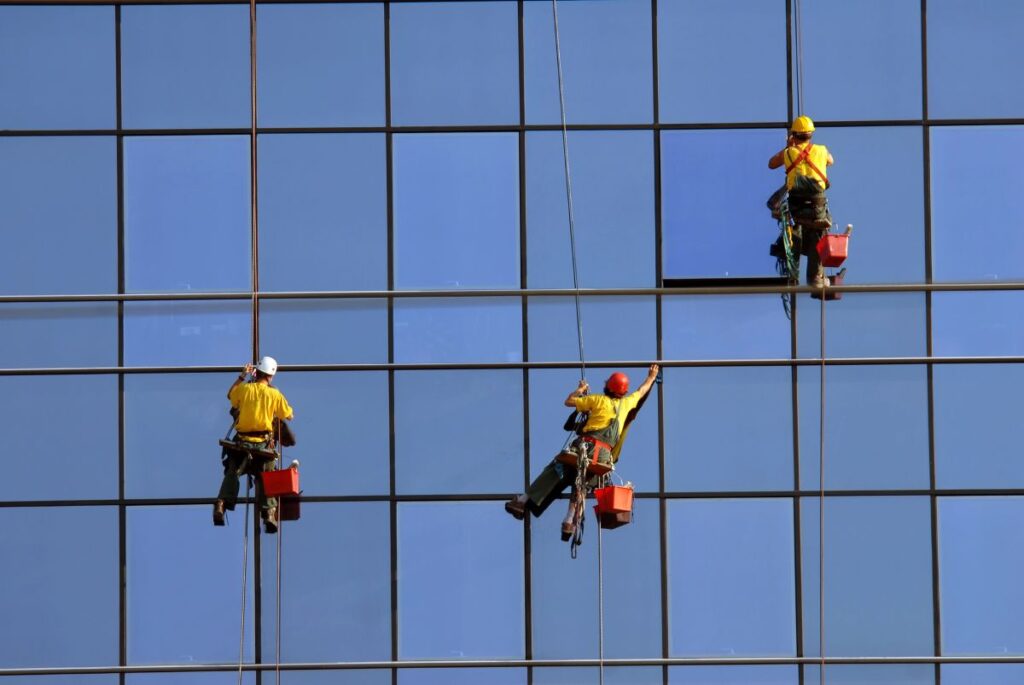
Anyone who has walked through the CBD or along the waterfront has noticed rope technicians suspended above the city. These height workers in Auckland carry out a wide range of tasks that keep buildings safe, watertight and visually maintained. From ground level the work can look calm and simple, yet each movement relies on structured training, risk assessment and technical experience.
This explainer outlines the work, the conditions and the systems behind professional height work across the region.
TL;DR: The Fast Facts About Height Workers
- They handle cleaning, repairs, inspections, leak tracing and maintenance on difficult access areas.
- Rope access often completes tasks faster and with fewer disruptions than scaffolding.
- Recognised training systems guide safe and reliable performance at height.
- Auckland’s coastal exposure and tight building layout drive strong demand for rope access.
- Experience supports accurate assessments and safer choices on complex work sites.
Understanding the Role of Height Workers in Auckland
Height workers provide access solutions for buildings and structures where standard equipment falls short. Auckland contains a mix of older buildings, glass towers, steep roofs and industrial facilities that require a range of approaches. Height workers bridge the gap by reaching façades, internal voids, roof edges, tensioned surfaces and confined spaces without extensive equipment footprints.
Many tasks cannot wait for full scaffolding or mechanical access. High rise glass cleaning, small joint repairs, debris removal, cladding checks and leak tracing often need a faster approach. Rope access gives workers the ability to glide across a surface, stop where required and complete precise tasks while keeping ground level disruptions low.
Building owners who schedule façade cleaning or glass care at height also benefit from learning the common mistakes to avoid when hiring building washing services.
The layout of central Auckland reinforces this advantage. Footpaths are narrow, road lanes are limited and building shapes are varied. Rope access systems adapt well to these conditions and allow building owners to maintain assets with shorter work windows.
Skills and Training Behind Professional Rope Access
Professional rope access is regulated through structured qualifications such as IRATA and NZQA. These systems emphasise technical competence, safe working habits and the ability to recognise risks early. Workers learn rope handling, load management, equipment selection and anchor evaluation. As they progress, they gain skills in rescue procedures, advanced rigging and oversight of less experienced workers.
Training is supported by ongoing practice and regular reassessment. Rope equipment must be inspected routinely, and workers must stay familiar with modern gear, updated regulations and new building materials. Many tasks require an understanding of how different claddings, glazing systems or concrete panels respond to weight, vibration or temperature changes.
Judgement is another critical skill. Auckland buildings encounter unique challenges such as wind funnels between towers, salt on exposed steel, brittle materials on ageing façades and unpredictable surface temperatures. Skilled workers recognise these conditions and adjust their movement, anchor choices and work sequence to keep risk low and efficiency high.
The Safety Framework Height Workers Rely On
Every professional height work job begins with a detailed review of the site. This includes checking anchor positions, rope routes, roof access points, surface conditions and the presence of pedestrians or vehicle traffic below. Auckland’s weather can change quickly, so teams assess wind patterns, shade lines and surface temperature before committing to the ropes.
Rope access uses a two rope method that separates the main working line from the secondary safety line. Each line connects to independent anchors to reduce the chance of system failure. Before any descent, workers test load direction, confirm knots, inspect rigging and check for sharp edges or weak surfaces that may affect the rope.
A strong safety culture underpins each decision. This includes active communication between workers on the ropes and those on the roof or ground. Rescue plans are established from the beginning and account for the specific structure, height and potential obstacles. All equipment is recorded, checked and logged, keeping the entire process transparent and traceable.
The Jobs Height Workers Handle Across Auckland
Height workers take on a wide variety of tasks that keep Auckland’s buildings and infrastructure functioning. Façade cleaning remains one of the most visible activities, especially on glass towers along Queen Street, Fanshawe Street and the waterfront. These façades need regular attention because salt spray and pollution can reduce clarity and degrade protective coatings.
Repairs and diagnostics are another major focus. Height workers trace leaks around windows, investigate cracks in panels and reseal joints that have worn over time. Many leaks begin in narrow spots that scaffolding cannot easily reach. Rope access allows close range inspection that often reveals issues hidden from ground level.
Height workers also support industrial and infrastructure facilities. They inspect turbines, check tension in cables, maintain bridge components and review the condition of equipment inside factories where machinery limits movement. Rope access provides a controlled solution for accessing elevated pipes, ducts and platforms without interrupting operations for long periods.
Construction support is another growing area. Height workers help install signage, lift small components, stabilise loose materials and prepare façades for repair work. They can guide materials into place with precision, which is useful in tight spaces where cranes or lifts would struggle.
Why Many Property Owners Choose Rope Access Over Scaffolding
Rope access offers speed. Workers can rig anchor points and begin operations in a short period, reducing the time spent preparing for the task. This matters in Auckland, where many building owners prefer limited disruption for tenants, shopfronts and foot traffic.
Cost efficiency is another driving factor. Scaffolding requires labour, transport and extensive set-up time even for small repairs. Rope access focuses on the immediate problem area and avoids covering entire façades. This approach often lowers overall project costs, especially for short projects or targeted repairs.
Rope access also provides versatility. Workers can shift horizontally or vertically with little delay, enabling them to inspect additional areas or adjust the work sequence as needed. This flexibility is useful when inspections uncover related issues or when weather changes alter the safest path across a façade.
Another advantage is reduced impact on the building and its occupants. Scaffolding can block windows, reduce natural light, create noise and limit access. Rope access leaves most of the building unobstructed and allows workers to complete tasks with minimal intrusion.
The Rising Demand for Skilled Height Workers in Auckland
Auckland continues to expand with new high-rise developments, mixed use buildings and industrial upgrades. Each new structure adds new maintenance demands. Height workers are involved early through inspection tasks and later through regular upkeep. As more buildings rely on modern cladding and glazing systems, rope access becomes an important method for ongoing care.
Older buildings also require consistent attention. Weather exposure takes a toll on concrete joints, fixings, coatings and sealants. Height workers support property owners by identifying and addressing small issues before they develop into costly failures.
Compliance expectations continue to increase. Building owners face pressure to maintain façades, meet safety standards and complete documented inspections. Height workers play a role in helping owners stay ahead of these expectations by accessing areas that are otherwise overlooked.
Demand for trained workers has risen as rope access becomes more widely recognised across Auckland. The combination of efficiency, safety and accuracy aligns well with the region’s building stock and the expectations of property managers who value reliable results.
Final Thoughts: Choosing the Right Specialists for Work at Height
Selecting a provider for height work requires more than comparing prices. Reliable outcomes depend on trained workers, strong safety processes and clear communication. Building owners benefit from teams with consistent experience across both modern and ageing structures in Auckland.
Rope access continues to support the city’s skyline, industrial facilities and infrastructure through precise, controlled and adaptable methods. Quality workmanship at height protects building performance, maintains appearance and limits long term repair costs.
Height workers remain an important part of the region’s maintenance ecosystem and play a steady role in keeping Auckland’s most challenging areas safe and functional.