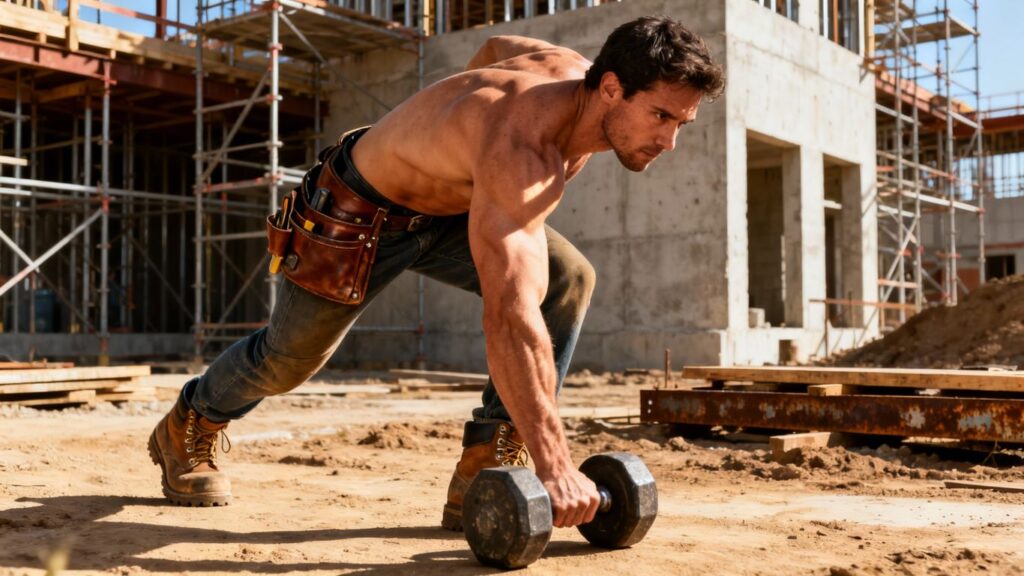
Alright, let’s talk about getting yourself sorted for 2026. You’re out there on the tools all day, doing the hard yards, so looking after your body is a no-brainer. We’re not talking about turning into a bodybuilder or anything, just making sure you’ve got the strength and stamina to get through the week without feeling like you’ve been run over by a digger. These tradie fitness tips are all about making you feel better and work smarter, not harder.
Key Takeaways
- Keep yourself topped up with water throughout the day; being even a bit dehydrated can knock your strength around. Think about a coffee or energy drink before a big job, but don’t overdo it.
- Get your body moving properly before you start lifting or doing anything strenuous. This means dynamic stretches, not just holding a stretch. Also, try different ways of gripping things for heavier lifts, and don’t forget to train one limb at a time sometimes to build more balanced power.
- Your head’s in the game too. Staying focused on the actual muscle you’re working, or just being calm before a big effort, can make a surprising difference to how much you can do.
Fueling Your Fire: Essential Tradie Fitness Tips
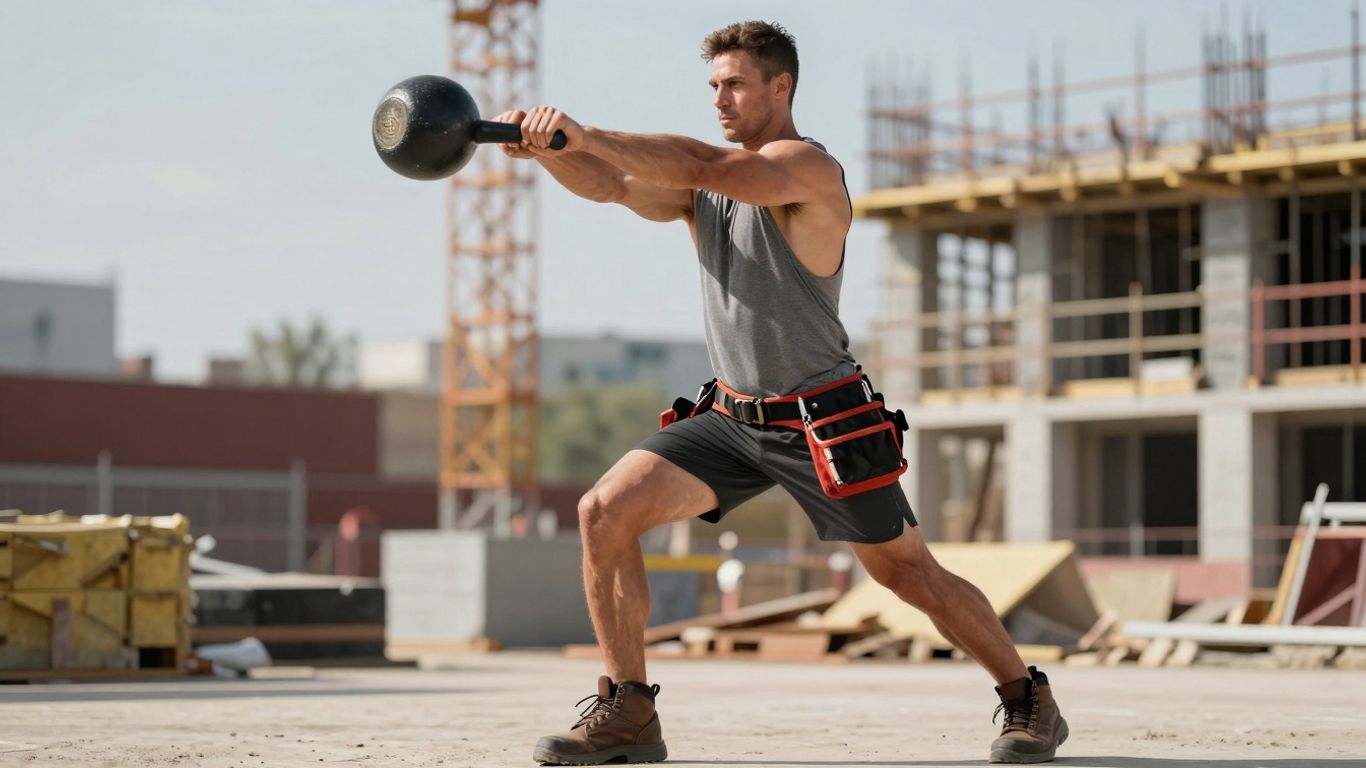
Right then, let’s talk about keeping your engine running smoothly, especially when you’re out there grafting. Being a tradie means you’re already doing a fair bit of physical work, but to really get stronger and avoid feeling like a worn-out rag by the end of the week, you’ve got to pay attention to what you’re putting into your body and how you’re preparing it.
Hydration Hacks for the Hard Yards
This is a big one, and honestly, most of us probably don’t drink enough. You’re out in the elements, sweating it out, and if you’re not topping up your fluids, you’re going to feel it. Being even a little bit dehydrated can seriously knock your strength. We’re talking up to a 20% drop in how much power you can put out, which is massive when you’re trying to shift heavy materials or just get through a long day.
So, what’s the plan? Aim for at least a gallon of water a day. That sounds like a lot, but spread it out. Start your day with a good glug, keep a bottle on you at all times, and sip away. Before you even start your main work or a workout, get at least 15-20 ounces in you. Then, during your work, try to get 5-10 ounces every 15 minutes. It sounds like a lot of trips to the loo, but trust me, it’s worth it. A good trick is to weigh yourself before and after a tough session. For every couple of pounds you’ve lost, try to drink about a quart of fluid. It helps you get a handle on how much you’re actually losing.
Here’s a quick rundown:
- Daily Target: Aim for a minimum of one gallon (around 4.5 litres) of water.
- Pre-Work Boost: Drink 15-20 ounces (about 450-600ml) before you start.
- During Work: Sip 5-10 ounces (about 150-300ml) every 15 minutes.
- Post-Work Replenish: Replace lost fluids based on weight loss (approx. 1 quart per 2 lbs lost).
Don’t underestimate the power of simple water. It’s the cheapest and most effective performance enhancer you’ve got. Fancy drinks are fine now and then, but plain water is your best mate on site.
Caffeine Kick-Starts for the Construction Site
Now, let’s talk about that little boost. We all know caffeine can wake us up, but it can also give you a bit of a physical edge. Unlike a lot of supplements that take weeks to show results, caffeine can hit you pretty quickly. Studies show that taking around 200-400 milligrams about an hour before you get stuck into some heavy lifting or a tough task can genuinely increase your strength and how many reps you can do.
Some research even found that caffeine could add about five pounds to a one-rep max bench press. That might not sound like much, but over a day of lifting and shifting, those little bits add up. It can help you push through that last bit of fatigue when you’re trying to get a job done.
So, if you’re feeling a bit sluggish or know you’ve got a particularly demanding day ahead, a coffee or a caffeine supplement an hour beforehand could make a noticeable difference. Just be mindful of how much you’re having and when, so it doesn’t mess with your sleep later on. A moderate amount, used strategically, can be a real game-changer for your physical output.
| Source | Typical Caffeine Amount | Effect |
|---|---|---|
| Espresso Shot | 64 mg | Quick energy boost |
| Black Coffee | 95 mg | Sustained alertness and focus |
| Pre-Workout | 150-300 mg | Performance enhancement, increased strength |
| Energy Drink | 80-200 mg | Rapid energy surge, potential jitters |
Mastering Your Movement: Strength and Technique
Right then, let’s talk about getting properly strong and moving like you know what you’re doing on site. It’s not just about heaving things around; it’s about doing it smart to build real power and avoid ending up knackered or, worse, injured. We’re going to look at how you warm up, how you grip things, and why doing one side at a time can actually make you stronger overall.
Dynamic Warm-Ups: Powering Up Your Performance
Forget those static stretches where you hold a position for ages. Before you start shifting heavy materials or getting stuck into a tough job, you need to get your body moving. Dynamic warm-ups are all about controlled, fluid movements that get your blood pumping and your muscles ready for action. Think of it like getting a machine up to speed – you don’t just jam the throttle, you ease it in.
Here’s a quick routine to get you started:
- Arm Circles: Start small and gradually make them bigger, forwards and backwards. Get those shoulder joints loose.
- Leg Swings: Forward and backward, then side to side. This loosens up your hips and hamstrings.
- Torso Twists: Stand with your feet shoulder-width apart and gently twist your upper body from side to side. It’s good for your spine.
- Walking Lunges: Step forward into a lunge, keeping your back straight, and then push off to step into the next one. Great for legs and glutes.
Doing this for about 5-10 minutes before you really get stuck in can make a big difference to how powerful you feel and how well your body copes with the strain. It primes your nervous system for the work ahead.
The Art of the Staggered Grip for Heavier Lifts
When you’re dealing with serious weight, like shifting a pallet or a heavy beam, how you grip the bar or object can be a game-changer. The standard grip, where both hands are overhand, is fine for most things. But if you’re trying to lift more, or just want a more stable hold, try a staggered grip. This means one hand is overhand (palm facing you) and the other is underhand (palm facing away). This setup stops the bar from wanting to twist out of your hands, giving you a much better mechanical advantage. It’s like having an extra bit of lock-in.
- How to do it: Simply place one hand overhand and the other underhand on the bar or object.
- Balance it out: To make sure you’re not favouring one side, swap which hand is over and which is under every few sets or every other workout.
- Why it works: This grip helps prevent the bar from rolling, which means you can often lift more weight or do more reps because your grip isn’t the weak link.
This simple change in how you hold the weight can mean you can lift more, for longer, without your grip giving out. It’s a trick that can add serious weight to your lifts and make those heavy jobs feel a bit more manageable.
Unilateral Training: Building Balanced Strength
Most of the work we do on site involves one side of the body more than the other at times, or we’re lifting things with one arm. So, it makes sense that our training should reflect that. Unilateral training means working one limb at a time – think single-leg squats, lunges, or single-arm rows. This is brilliant for spotting and fixing imbalances. If one leg is stronger than the other, or one arm has a bit more power, unilateral exercises will highlight it. By working on each side independently, you force that weaker side to work harder, bringing it up to par with the stronger one.
- Benefits: It helps correct muscle imbalances, improves core stability because your body has to work harder to stay balanced, and can even lead to greater strength gains overall compared to just doing two-sided exercises.
- Examples: Single-leg deadlifts, Bulgarian split squats, dumbbell bench presses (one arm at a time), and single-arm rows are all great unilateral moves.
- Progression: Start with lighter weights and focus on perfect form. As you get stronger and more stable, you can gradually increase the weight. The goal is to make both sides equally capable.
By incorporating these movement strategies, you’re not just getting stronger; you’re getting smarter about how you move, which is exactly what you need for a long and successful career in the trades.
Mind Over Matter: Mental Edge for Tradies
Right then, let’s talk about what’s going on between your ears when you’re on the job. It’s not just about brute force, is it? Your brain plays a massive part in how strong you are and how well you perform, especially when you’re doing tough physical work day in, day out. Think about it – you’ve got a heavy load to shift, or a tricky bit of kit to manoeuvre. What you’re thinking about can make all the difference.
Focusing Your Mind for Maximum Gains
This is where you really need to get your head in the game. When you’re lifting something heavy or performing a repetitive task that requires strength, where you direct your attention matters. Studies have shown that if you’re aiming to build muscle, focusing on the actual muscle you’re working can give you a significant boost in muscle activity – we’re talking over 20% more. So, when you’re doing a bicep curl, really feel that bicep squeezing. If your goal is pure strength, like shifting a big beam, then concentrating on moving the weight through its full range of motion can increase your strength by about 10%. It’s about tuning into what you want to achieve.
Here’s a quick breakdown:
- Muscle Growth Goal: Concentrate on the feeling of the muscle contracting. Imagine it getting bigger and stronger with each rep.
- Strength Goal: Focus on the movement itself. Think about driving the weight up and controlling it down.
- Endurance Goal: Keep your mind steady, perhaps using a rhythmic focus on your breathing or the movement pattern.
It sounds simple, but it’s a powerful tool. Don’t just go through the motions; be present with every single lift or movement.
The Power of Relaxation Before a Big Lift
Now, this might seem a bit counter-intuitive. You see people getting all hyped up before a big lift, maybe shouting or getting angry. But research suggests that being too worked up might actually hinder your performance. Instead, a calmer state of mind can be more effective for an immediate strength boost. Imagine you’ve got a really heavy piece of equipment to lift, or you’re about to attempt a personal best on a tough job. Instead of getting yourself into a frenzy, try a different approach.
Some studies have shown that athletes who used relaxation techniques, like listening to calm music in a quiet space, actually performed better on strength tests than those who got themselves into a highly agitated state. It seems that being too stressed or aggressive can make your muscles tense up in a way that doesn’t help. A more relaxed nervous system can allow for more efficient muscle activation when you need it.
So, before you tackle that really demanding task:
- Take a few deep, slow breaths. In through your nose, out through your mouth.
- Try to clear your mind of distractions. Think about the task ahead, but without the pressure.
- If possible, find a quiet moment to just be still for a minute or two.
It’s not about being lazy or unmotivated; it’s about channeling your energy effectively. Think of it like a coiled spring – it needs to be tense, but not so tight that it snaps. A controlled tension, guided by a calm mind, is often the strongest.
By mastering these mental strategies, you’re not just getting physically stronger; you’re building a more resilient and effective approach to your work, making 2026 a truly powerful year for you.
Right, That’s a Wrap!
So there you have it. Getting a bit stronger and fitter isn’t some dark art reserved for gym rats. It’s about making smart choices, whether that’s remembering to down a decent amount of water on a hot day on site, or chucking in a few extra reps when you’re feeling it. Don’t overthink it; just start small and be consistent. You’ll be feeling the difference before you know it, and 2026 will be a whole lot easier on your body. Now, go crack on!